
SOLD OUT
MORTON FELDMAN
ROTHKO
CHAPEL
Jan Williams, conductor
MONDAY, OCTOBER 5, 2026 | 8 PM
ZIPPER HALL at the COLBURN SCHOOL
200 S GRAND AVE, LOS ANGELES, CA 90012
PROGRAM
Morton FELDMAN – Something Wild in the City (1960)
JOSQUIN des Prez – Magnus es tu domine (1504)
Morton FELDMAN – King of Denmark (1965)
JOSQUIN des Prez – Nymphes des bois (1497)
Morton FELDMAN – Something Wild (reprise) (1960)
::: intermission :::
Morton FELDMAN – Rothko Chapel (1971)
* United States Premiere
PERFORMERS
ECHOI soloists:
Jan WILLIAMS, conductor
Laurel IRENE, soprano
Amy WILLIAMS, celesta
Andrew McINTOSH, viola
Jonathan HEPFER, percussion
David HARRIS, choir director
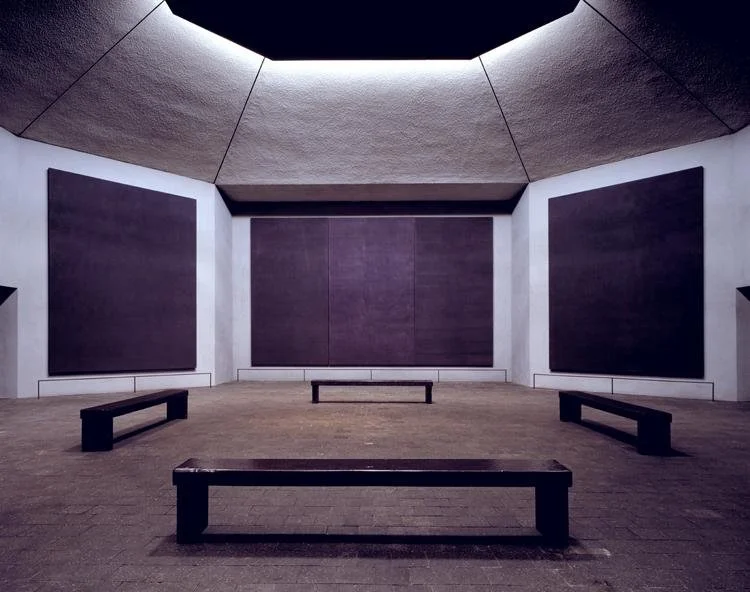
ABOUT THE PROJECT
“I feel that I listen to my sounds, and I do what they tell me, but not what I tell them. Because I owe my life to these sounds. Right? They gave me a life.” (Morton Feldman)
“I was very close with Rothko in the last years of his life, and he was working on the Rothko Chapel…and I saw those pictures live…and he had this fantastic studio […] And he would always say, all the time, it was actually his song: ‘Is it there? Is it there? I think it’s there.’ That’s what happens when you work abstractly…You gotta pray.” (Morton Feldman)
Celebrating the centenary of Morton Feldman, one of the giants of twentieth-century music, Monday Evening Concerts presents his 1971 magnum opus, Rothko Chapel. A figure whose opinions and physical presence were famously larger than life, Feldman created music of extraordinary quietude and sublime beauty, shaped in dialogue with an extraordinary circle of artists, writers, and musicians that included Philip Guston, Mark Rothko, Jackson Pollock, Willem de Kooning, Frank O’Hara, Samuel Beckett, and John Cage. MEC’s resident ensemble ECHOI performs Rothko Chapel under the direction of Jan Williams, Feldman’s close collaborator at SUNY Buffalo, in a program that places the work alongside rarely heard early compositions by Feldman and choral music by the Renaissance master Josquin des Prez, a composer to whom Feldman returned frequently in conversation.
M.E.C. gratefully acknowledges the generous support of the Yvar Mikhashoff Trust for New Music for this presentation.
-
Morton Feldman was born in New York in 1926 and died there in 1987. Just like Cage, a close friend, he was an American composer – an American artist – an American in the true sense of the word.
He identified himself by differentiating his views on composition from those of his colleagues in Europe. He was proud to be an American because he was convinced that it enabled him the freedom, unparalleled in Europe, to work unfettered by tradition. And, he was an American also in what may have been a slight inferiority complex in the face of cultural traditions in Europe, something he proudly rejected and secretly admired.
Like any true artist, Feldman was endowed with a sensitivity for impressions of a wide variety of sources, literature and painting in particular. His affinity to Samuel Beckett has enriched music literature by a unique music theatre piece, Neither, and two ensemble works. His friendship with abstract expressionist painters gave birth to a range of masterpieces, Rothko Chapel in particular. But even the knotting of oriental rugs gave Feldman musical ideas (The Turfan Fragments).
To the question as to why he preferred soft dynamic levels, he replied:
“Because when it’s loud, you can’t hear the sound. You hear its attack. Then you don’t hear the sound, only in its decay. And I think that’s essentially what impressed Boulez . That he heard a sound, not an attack, emerging and disappearing without attack and decay, almost like an electronic medium.
Also, you have to remember that loud and soft is an aspect of differentiation. And my music is more like a kind of monologue that does not need exclamation point, colon, it does not need…”
Feldman also had an intriguing reply up his sleeve when it came to answering the question why he composed in the first place:
“You know that marvellous remark of Disraeli’s? Unfortunately, he was not a good writer, but if he was a great writer, it would have been a wonderful remark. They asked him why did he begin to write novels. He said because there was nothing to read. (laughs). I felt very much like that in terms of contemporary music. I was not really happy with it. It became like a Rohrschach test.”
-
Josquin Des Prez was a Franco-Flemish composer of the Renaissance. He was the most famous European composer between Guillaume Dufay and Palestrina, and is usually considered to be the central figure of the Franco-Flemish School. Josquin is widely considered by music scholars to be the first master of the high Renaissance style of polyphonic vocal music that was emerging during his lifetime.
During the 16th century, Josquin gradually acquired the reputation as the greatest composer of the age, his mastery of technique and expression universally imitated and admired. Writers as diverse as Baldassare Castiglione and Martin Luther wrote about his reputation and fame; theorists such as Heinrich Glarean and Gioseffo Zarlino held his style as that best representing perfection.
Josquin wrote both sacred and secular music, and in all of the significant vocal forms of the age, including masses, motets, chansons and frottole. During the 16th century, he was praised for both his supreme melodic gift and his use of ingenious technical devices. In modern times, scholars have attempted to ascertain the basic details of his biography, and have tried to define the key characteristics of his style to correct misattributions, a task that has proved difficult, as Josquin liked to solve compositional problems in different ways in successive compositions–sometimes he wrote in an austere style devoid of ornamentation, and at other times he wrote music requiring considerable virtuosity. Heinrich Glarean wrote in 1547 that Josquin was not only a "magnificent virtuoso" (the Latin can be translated also as "show-off") but capable of being a "mocker", using satire effectively. While the focus of scholarship in recent years has been to remove music from the "Josquin canon" (including some of his most famous pieces) and to reattribute it to his contemporaries, the remaining music represents some of the most famous and enduring of the Renaissance.
In the domain of secular music, Josquin left numerous French chansons, for from three to six voices, as well as a handful of Italian secular songs known as frottole, as well as some pieces which were probably intended for instrumental performance. Josquin's earliest chansons were probably composed in northern Europe, under the influence of composers such as Ockeghem and Busnois. (Philadelphia Chamber Music Society)
-
Jan Williams is a percussion soloist and conductor, who has toured extensively throughout the United States, Europe, New Zealand, and Australia. Composers such as Lukas Foss, John Cage, Elliott Carter, Joel Chadabe, Morton Feldman, Orlando Garcia, Gustavo Matamoros, Luis de Pablo, Frederic Rzewski, Nils Vigeland, and Iannis Xenakis have all written music expressly for Jan Williams.
Born in Utica, New York on July 17, 1939, Williams later earned his bachelor’s and master’s degrees in music at Manhattan School of Music, where he studied percussion with Paul Price and performed as a member of the American Symphony Orchestra from 1962-1964 under conductor Leopold Stokowski. He was invited to Buffalo as one of the first class of Creative Associates for the Center of the Creative and Performing Arts in 1964 at the University at Buffalo.
While at the University at Buffalo, he created the University at Buffalo Percussion Ensemble in 1964. Later, in 1967, he was appointed to the Music Faculty, and served as Chair of the Music Department from 1981-1984. Prior to his retirement in 1996, he also served as artistic director of the Center of the Creative and Performing arts from 1974-1979 and as resident conductor from 1979-1980.
Morton Feldman’s compositions “Why Patterns?”, “Crippled Symmetry”, and “For Philip Guston” were written for the Feldman Soloists: Jan Williams, Nils Vigeland and Eberhard Blum. This group performed the premieres of these works and presented Feldman’s music widely in Europe, the Middle East and the United States.
He is Professor emeritus at the University at Buffalo where he and John Bergamo founded the University at Buffalo Percussion Ensemble in 1964. He was the ensemble’s director until his retirement in 1996. He has recorded for Columbia, Vox/Turnabout, Desto, Lovely Music, Spectrum, Wergo, DGG, Orion, Hat-Art, OO, New World, Deep Listening, EMF Media, and Mode Records. With Yvar Mikhashoff, he was Co-Artistic Director of the North American New Music Festival from 1983-1993.
-
Performer/composer David Harris specializes in new music, American music, and the intricacies of communication in singing, writing, and conducting. Through his "compassion-focused, artist-centered" rehearsal process, David opens vocalists into discovery spaces that prioritize unity through each individual's experience. He has premiered and recorded hundreds of pieces for vocal and instrumental ensembles, and theatrical works. Compositionally, David explores elements in many styles including illuminating harmonics in vocal music, textural layering, structured improvisation, and contrasting resonant strategies.
His personal vocal exploits include mastery in multiple styles and extended techniques, and as a producer / director / engineer he has seen the creation of hundreds of studio recordings. His career has included ensembles and notable performances in Denver, New York, Boston, and Los Angeles. For a decade he directed the professional ensemble Laude in L.A. in addition to performing with The Industry, Long Beach Opera, Resonance Collective, Hear Now Festival, and MEC. Now residing in Ashland, OR, he is the Ensemble Director for the N.E.O. Voice Festival, the co-founder of VoiceScienceWorks, a promoter of justice-inspiring musical exploits, and an active part of many of the new music scene.
BIOS
-
Laurel Irene (M.M.), "astounding ... downright superhuman" (LA Times) vocal artist and voice researcher, specializes in bringing new compositional works to life with vocal repertoire ranging from Monteverdi to Mozart to the wacky, wild, and extreme sounds of the 21st century. As “major singer...one who seems as if she can do anything” (LA Times), she draws on her research in vocal timbre and acoustics to heighten unique vocal textures and expressions. In 2019 she performed the role of Countess Almaviva in REDCAT's 12 hour endurance art piece, Bliss, earning Mark Swed's acclaim as “one of the most astonishing performances, vocally and interpretively, I have ever encountered.” A champion of new music and bringing new works to life, she recently premiered the role of Julia in George Lewis’ Pulitzer Prize finalist opera, The Comet/Poppea. Other recent features include performances with The Los Angeles Philharmonic, The Kennedy Center, AMOC: American Modern Opera Company, Long Beach Opera, The LA Phil New Music Group, Musica Angelica Baroque Orchestra, LACMA: Los Angeles County Museum of Art, The Industry, The Getty Museum, Monday Evening Concerts, MOCA: Museum of Contemporary Art, and The First Congregational Church, L.A.
As an avid voice educator, before moving to Oregon she served on the California Institute of the Arts faculty. As co-founder of the educational organization, VoiceScienceWorks and the N.E.O. Voice Festival, she gives voice workshops at conferences and collegiate settings across the United States and Europe including the Pan-American Vocology Association, American Choral Directors Association, Acoustical Society of America, Harvard University, York University, College of the Holy Cross, Southern Oregon University, University of California Los Angeles, and Cornish College of the Arts.
Laurel is an alumna of performance programs at the USC Thornton School of Music, New Music on the Point, Cortona New Music Sessions, Oregon State University, California State University L.A., and the Summer Vocology Institute.
-
Los Angeles-based Andrew McIntosh is a GRAMMY-nominated violinist, violist, composer, and baroque violinist whose musical interests span historical performance practice, microtonal tuning systems, and the 20th-century avant-garde. He is a professor of violin, viola, and composition at the California Institute of the Arts, concertmaster of both Tesserae and Echoi, and a founding member of Wild Up, the Formalist Quartet, and Wadada Leo Smith’s Red Koral Quartet. He has been described by Alex Ross in The New Yorker as “a brilliant composer who has a sideline as a virtuoso early-music violinist”, and “a composer preternaturally attuned to the landscapes and soundscapes of the West”.
His compositions often incorporate just intonation and re-tuning of instruments, spanning genres from instrumental concert music to opera, work with field recordings, and fixed media. He has been commissioned by the LA Philharmonic, Miller Theatre at Columbia University, Yarn/Wire, Wild Up, Calder Quartet, Industry Opera Company, Piano Spheres, and violinists Ilya Gringolts and Movses Pogossian, and his music has been featured at venues including Walt Disney Concert Hall, Ojai Festival, Big Ears Festival, the Gaudeamus Festival, Time:Spans Festival, and the Composer Portrait Series at Miller Theatre.
Recent collaborations as a performer include the premieres of new large-scale chamber works by La Monte Young (with the Theatre of Eternal Music String Ensemble), Wadada Leo Smith (with Red Koral Quartet), and Éliane Radigue/Carol Robinson (with Echoi). He has worked personally with Christian Wolff, Sofia Gubaidulina, Sir Peter Maxwell Davies, Helmut Lachenmann, Raven Chacon, Harold Budd, Marc Sabat, Wolfgang von Schweinitz, Sarah Davachi, Tom Johnson, and Jürg Frey, and his recordings can be heard on labels including KAIROS, Another Timbre, Edition Wandelweiser, New Amsterdam Records, Bridge, Innova, New World Records, TUM Records, Darla, Populist, and New Focus Records.
As a baroque violinist he has performed alongside renowned baroque musicians such as Rachel Podger, Christophe Rousset, and Stephen Stubbs, and he is particularly recognized for his performances of the complete Rosary Sonatas of Heinrich Biber. About a 2025 performance of the cycle at the 92nd Street Y, the New York Times wrote that his interpretation was characterized by “exceptional clarity and rhetorical verve”. -
Jonathan Hepfer is a percussionist, conductor, and concert curator. He began playing classical music at age seventeen after discovering the work of John Cage while studying at SUNY Buffalo. Subsequently, Jonathan attended Oberlin Conservatory, UC San Diego and the Musikhochschule Freiburg (on a DAAD fellowship) where he studied with Michael Rosen, Steven Schick and Bernhard Wulff.
Since 2015, he has been the Artistic Director of Monday Evening Concerts (MEC) in Los Angeles as well as its resident ensemble ECHOI. At MEC, Jonathan has directed performances of major works by Pierre Boulez, John Cage, Julius Eastman, Morton Feldman, Philip Glass, Gérard Grisey, Sarah Hennies, Yves Klein, Arvo Pärt, Steve Reich, Salvatore Sciarrino, Caroline Shaw, Tyshawn Sorey, Simeon Ten Holt and Iannis Xenakis.
As a curator and producer, he has presented works by Georges Aperghis, Pierluigi Billone, Carolyn Chen, Chaya Czernowin, Julius Eastman, David Hammons, Sarah Hennies, György Kurtág, Klaus Lang, Alvin Lucier, Hans Otte, Éliane Radigue, Michael Pisaro-Liu, Caroline Shaw, Wadada Leo Smith, Steven Takasugi, Davóne Tines and Wu Tsang.
Jonathan has directed (or co-directed) projects at venues such as the Getty Museum, Harvard University, Hauser & Wirth, Jeffrey Deitch, LACMA, LAXART, Marciano Art Foundation, the Santa Monica Carousel (Frieze), Thomas Mann House and the Pinault Collection in Paris.
As a percussion soloist, Jonathan has focused extensively on the works of Georges Aperghis, Pierluigi Billone, Julius Eastman, Brian Ferneyhough, Morton Feldman, Vinko Globokar, Helmut Lachenmann, Giacinto Scelsi, Iannis Xenakis and Walter Zimmermann. In this capacity, he has performed widely across the United States, Europe and Asia.
Recent independent projects have included serving as artistic director for a portrait of Julius Eastman at the Pinault Collection in Paris (a collaboration with Anaïs Ngbanzo, Dev Hynes and Adam Tendler) and performing the role of conductor in a revival of Deborah Hay's 'Solo 2' at the Getty Museum. Jonathan has also contributed to projects by friends such as Henrik Purienne ('Tasjaki' at Galerie Chenel), Vanessa Beecroft and Gustave Rudman ('Two Shadows' at Jeffrey Deitch) and Henri Levy Alexandre (Enfants Riches Déprimés S/S '25).
He has published interviews with Meredith Monk (Autre Magazine), Éliane Radigue (Purple Magazine) and Steve Reich (Kaleidoscope Magazine). Jonathan also documented the oral histories of the pioneering generation of percussion soloists (Jan Williams, Christoph Caskel, Sylvio Gualda, Jean-Pierre Drouet, Gaston Sylvestre, Maurizio Ben Omar).
Jonathan has served on the faculty at Art Center Pasadena and Cal Arts. He is interested in the ways that music intersects with visual art, literature, architecture, fashion and film.
-
The “fresh, daring and incisive” (Fanfare) compositions of Amy Williams have been presented by leading international performers, including the Pittsburgh Symphony Orchestra, Buffalo Philharmonic Orchestra, JACK Quartet, Bent Frequency, Ensemble Intercontemporain, Ensemble Musikfabrik, Wet Ink, International Contemporary Ensemble, Junction Trio, Orpheus, pianist Ursula Oppens, soprano Tony Arnold and bassist Robert Black. Her pieces appear on the Albany, Parma, Blue Griffin, Centaur and New Focus labels. As a member of the Bugallo-Williams Piano Duo, she has performed throughout Europe and the Americas and recorded six critically-acclaimed CDs for Wergo (works of Nancarrow, Stravinsky, Varèse/Feldman and Kurtág), as well as appearing on the Neos and Albany labels. Ms. Williams has been awarded a Howard Foundation Fellowship, Fromm Music Foundation Commission, Guggenheim Fellowship, Koussevitsky Music Foundation Commission, two awards from the American Academy of Arts and Letters, a Fulbright Scholars Fellowship to Ireland, a MacDowell fellowship and the 2024 Henri Lazarof International Commission Prize. Ms. Williams holds a Ph.D. in composition and Master’s degree in piano performance from the University at Buffalo. She has taught at Bennington College and Northwestern University and is currently Professor of Composition at the University of Pittsburgh and Visiting Professor of Composition at Columbia University (2026-2027). She is Artistic Director of the New Music On The Point Festival in Vermont.